

Best Outdoor Activities in UAE for Adventure Lovers
Discover the best outdoor activities Dubai, from desert safaris to skydiving and dune bashing. Explore top adventure activities in UAE for thrill seekers.
Many travelers view the United Arab Emirates primarily as a land of futuristic skyscrapers, luxury shopping malls, and air-conditioned gold souks. While these urban wonders are impressive, focusing solely on the city means you are missing the true heart of the region.
This narrow perspective leaves adventure seekers disconnected from the raw, soul-stirring beauty of the Arabian landscape, where rugged mountains meet endless dunes and turquoise waters. If you leave the UAE without exploring its natural playgrounds, you have only seen half of the story.
Fortunately, the country has invested heavily in a world-class adventure infrastructure that allows you to experience the wilderness with professional safety standards. This guide reveals the 11 best outdoor activities in the UAE for adventure lovers in 2026, combining expert insights with practical logistics to help you plan an unforgettable journey.
Outdoor Activities In UAE
1. Dune Bashing Across the Arabian Desert
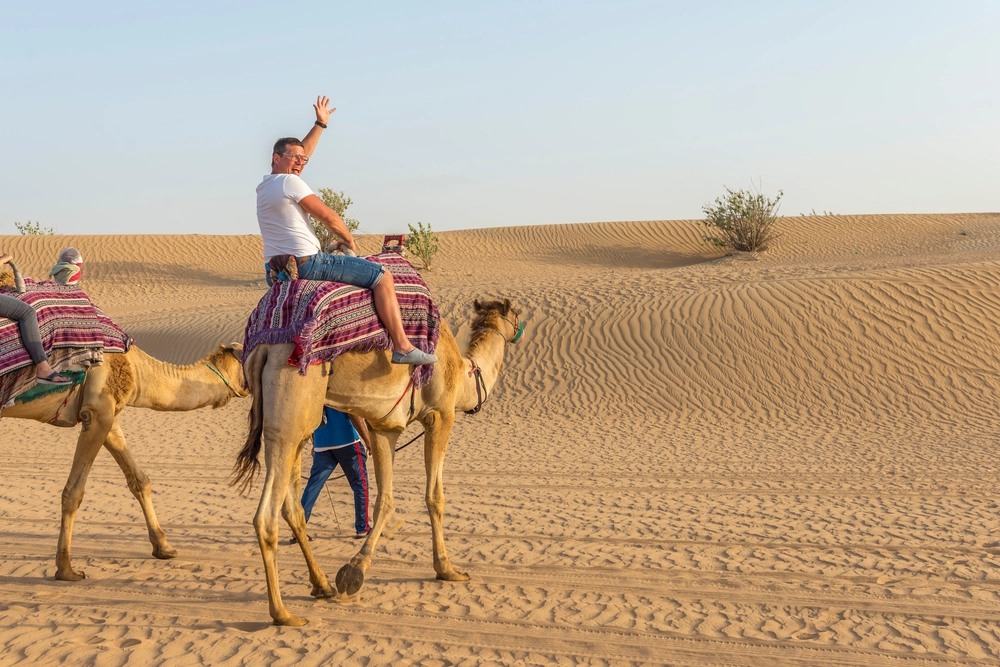
Dune bashing is the quintessential desert experience and remains a cornerstone of UAE tourism. It involves navigating the steep slopes of sand dunes in high-performance 4x4 vehicles, typically led by professional drivers who understand the fluid dynamics of the sand.
Industry experts often point out that the choice of location significantly changes the experience. The Lahbab Desert is famous for its “Big Red” dunes, which offer a vibrant terracotta hue and steep inclines perfect for adrenaline seekers. For those seeking a deeper connection with the wilderness, the Liwa Oasis in Abu Dhabi provides access to the Empty Quarter, which is home to some of the world’s tallest dunes like Tel Moreeb.
The technical side of dune bashing is fascinating. Before hitting the sand, drivers must deflate their tires to approximately 15 to 18 psi to increase the surface area and provide better traction. This activity is governed by strict safety regulations from the Department of Economy and Tourism, ensuring that all commercial vehicles are equipped with internal roll cages.
As the cooler months from October to April arrive, this becomes the primary choice for visitors looking to experience the desert’s natural power.
2. Quad Biking and Dune Buggy Rides
If you prefer being behind the wheel, quad biking and dune buggy rides offer a more personal way to conquer the desert. Unlike the passenger experience of dune bashing, these activities put you in control of an All-Terrain Vehicle or a high-powered buggy. Professional guides often recommend these for travelers who want to test their reflexes on the shifting sands of Al Badayer or the Lahbab region.
Safety is a major priority for these motor sports. Most operators require solo quad bikers to be at least 16 years old, although supervised tracks are often available for children as young as 12.
Dune buggies are generally considered more stable because they feature a wider wheelbase and full roll cages, making them a popular choice for families with older teens.
3. Desert Camping Under the Stars
Spending a night in the desert is a transformative experience that allows you to disconnect from the digital world. You can choose between regulated eco-glamping in the Dubai Desert Conservation Reserve or independent wilderness camping in the remote stretches of Liwa.
The transition from the city’s light pollution to the Bortle Class 1 skies of the deep desert is a highlight for amateur astronomers and photographers alike. For those choosing the Al Marmoom Desert Conservation Reserve, the experience is often paired with a “Bedouin Experience” where you can learn about the traditional nomadic lifestyle.
Expert campers stress the importance of “Leave No Trace” ethics, which include packing out all trash and using established fire rings to protect the fragile ecosystem. As travel analyst Justin Varghese notes, modern travelers are increasingly prioritizing these types of immersive and culturally rooted experiences over traditional sightseeing.
4. Jet Skiing Along Dubai’s Coastline
Dubai’s coastline offers a unique perspective of the city’s architectural marvels. Jet skiing has become a popular way to view landmarks such as the Burj Al Arab and Atlantis The Palm from the water. Most tours depart from Jumeirah Fishing Harbour or Dubai Marina, offering routes that range from 30 minute sprints to 2 hour discovery tours that circumnavigate the Palm Jumeirah.
Safety regulations managed by the Dubai Maritime City Authority require all riders to wear life jackets and follow designated “slow” zones near the shore. The engineering of the Palm Jumeirah actually aids jet skiers, as the outer crescent acts as a massive breakwater that keeps the inner lagoons calm and perfect for high-speed cruising.
5. Flyboarding and Water Jet Adventures
For those who want to feel like a superhero, flyboarding is the ultimate water-based thrill. This activity uses hydro-propulsion technology to thrust you up to 10 meters above the water’s surface. While it looks difficult, most beginners find their balance within 10 to 15 minutes of professional instruction.
The physical mechanics involve a 20 meter hose connected to a personal watercraft that pumps high-pressure water to a board attached to your feet. Beyond flyboarding, many operators now offer the “eFoil,” which is an electric hydrofoil board that allows you to glide silently over the water without any emissions, aligning with the UAE’s focus on sustainable tourism.
6. Yacht Cruising and Deep Sea Fishing
The maritime traditions of the UAE are deeply rooted in its history of pearl diving and dhow trading. Today, this legacy continues through luxury yacht charters and professional deep-sea fishing expeditions. Anglers often target Kingfish, Barracuda, and Grouper in the fertile grounds 20 to 60 kilometers offshore.
Moon Island is a particularly adventurous route, located about 70 miles offshore and offering a crescent-shaped natural beauty that is perfect for both fishing and snorkeling. In 2026, the marine industry is expected to grow by 12 percent as artificial reefs expand and attract more pelagic species. For those interested in the cultural link, some tours incorporate the history of the “Ghous Al-Kabir” era, when divers would descend to 18 meters with only a nose clip and a weighted rope.
7. Kayaking at Hatta Dam
Hatta is a scenic enclave located 90 minutes from Dubai in the Hajar Mountains, offering a refreshing escape from the coastal humidity. The Hatta Dam, with its turquoise water surrounded by jagged granite peaks, is the primary destination for kayaking. It is a peaceful environment because motorized boats are prohibited to protect the reservoir.
The logistics are straightforward as kayaking is available daily from 7:00 AM to 9:00 PM on a first-come, first-served basis. Prices are standardized, with single kayaks costing AED 60 and double kayaks for AED 120, offering unlimited time on the water. Historical enthusiasts will also appreciate the nearby Hatta Heritage Village, which showcases 3,000 years of human history and traditional irrigation systems called “falaj”.
8. Jebel Jais Zipline Experience
Ras Al Khaimah is the adventure capital of the UAE, home to Jebel Jais and the world-record-breaking “Jais Flight”. This is the world’s longest zipline, stretching 2.83 kilometers across the Hajar Mountain range at an altitude of 1,680 meters. Participants reach speeds of up to 160 km/h while flying in a “Superman” position.
The experience is professionally managed with strict weight and height requirements to ensure safety. In the 2025 and 2026 season, the mountain has introduced a phased reopening plan following maintenance, requiring casual visitors to book Viewing Deck Park tickets in advance to manage crowds.
9. Hiking Trails in Hatta and Jebel Hafeet
The UAE’s hiking scene has expanded rapidly, with government-curated trails that are color-coded by difficulty. Hatta alone features over 32 kilometers of trails, including the popular Hatta Sign Trail which leads to a massive sign similar to the one in Hollywood.
I remember attempting the Hatta Sign hike during a particularly warm afternoon in April. Halfway up the steep incline, the lack of shade and intense sun caused my vision to go spotty, and I had to find refuge behind a rock to rest and hydrate.
This is a common mistake for beginners. Expert guides like Workers Law emphasize that “you can even get heat stroke in winter” and recommend carrying at least one liter of water per hour. For those in Al Ain, the Jebel Hafeet ridge hike offers a more technical 9 kilometer route through 20 million year old rock formations.
10. Skydiving Over Palm Jumeirah
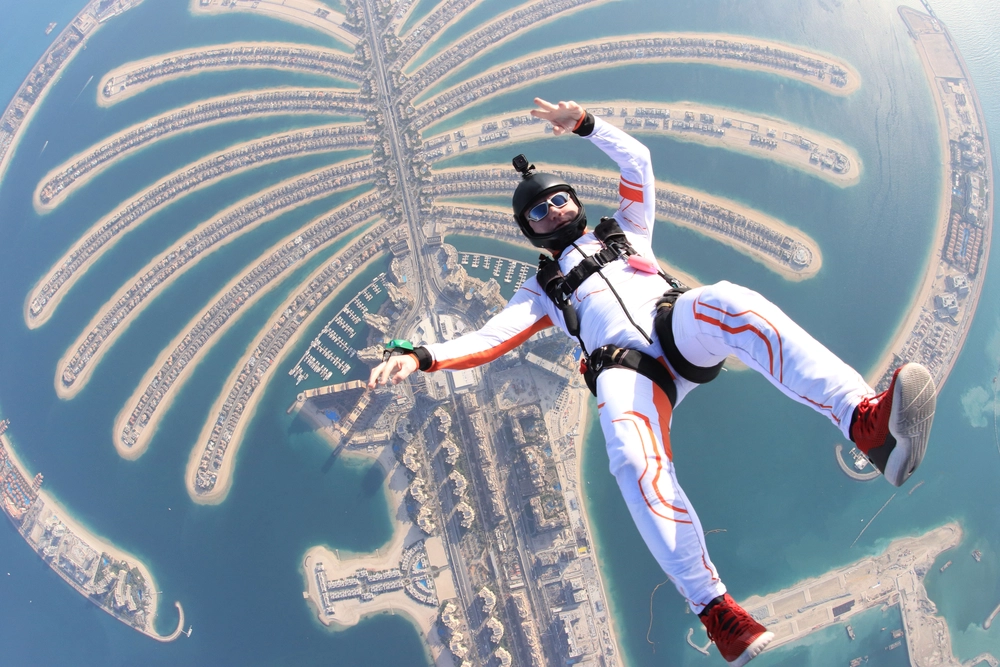
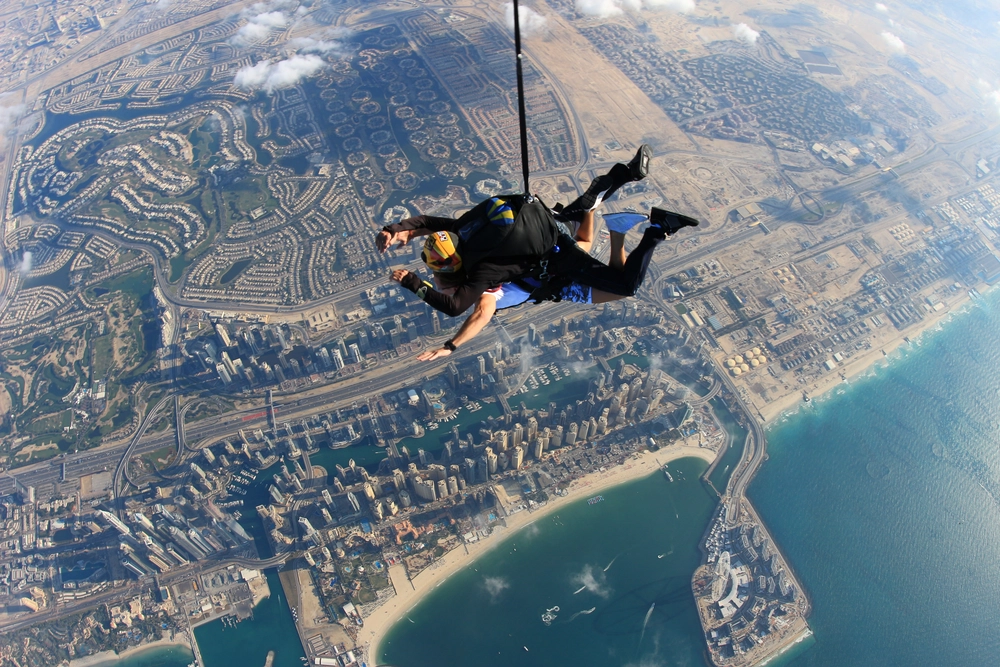
Skydiving is perhaps the most iconic adventure activity in Dubai, specifically at the Palm Dropzone. Tandem jumps are conducted from 13,000 feet, providing a 60 second freefall with views of the Palm Jumeirah, the World Islands, and the Burj Al Arab.
The eligibility standards are very strict to ensure a safe landing, with specific weight and Body Mass Index (BMI) limits for both men and women. Because this is one of the most sought-after experiences in global tourism, experts recommend booking at least three to four weeks in advance, especially during the peak winter season.
11. Hot Air Balloon Rides Over the Desert
For a more peaceful perspective, hot air ballooning offers a sunrise view of the Dubai Desert Conservation Reserve. These flights typically ascend to 4,000 feet, allowing you to spot Arabian oryx and gazelles in their natural habitat.
The UAE is unique for integrating falconry into the flight, where trained falcons perform aerial maneuvers alongside the balloon basket. All operations are licensed by the General Civil Aviation Authority, and flights are restricted to the cooler months when the air is stable enough for safe takeoff and landing. These tours often include a gourmet breakfast and a vintage Land Rover drive through the dunes after landing.
Final Verdict
The UAE has successfully transformed into a global leader in adventure tourism by leveraging its diverse geography and maintaining rigorous safety standards. Whether you are screaming across a mountain canyon on a zipline or silently drifting over the dunes in a balloon, the common thread is a deep respect for the environment and the local culture.
H.E. Bin Touq, a key official in the tourism sector, has affirmed that these unique experiences are central to the country’s national tourism strategy for 2031. For the best results, always respect the local customs by dressing modestly in public areas and choosing licensed operators who prioritize conservation. As you head into the wilderness, remember to carry plenty of water and always follow the “Leave No Trace” principles to preserve these incredible landscapes for future generations.